Sports Betting Powerhouses Fuel $41 Million Super PAC Push for 2026 Midterm Wins
Sports Betting Powerhouses Fuel $41 Million Super PAC Push for 2026 Midterm Wins

The Big Money Move in April 2026
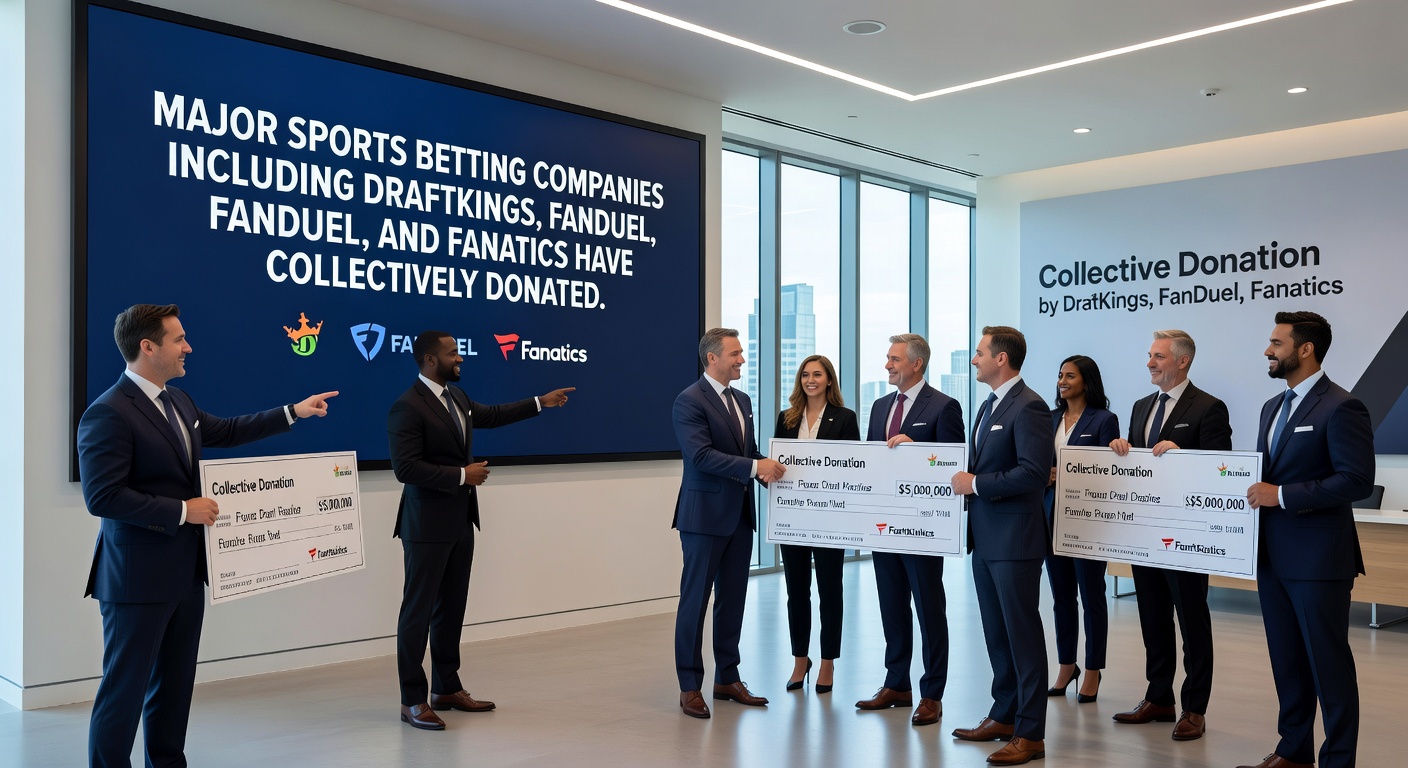
Major players in the sports betting world, including DraftKings, FanDuel, and Fanatics, have poured a collective $41 million into a freshly launched super PAC called Win for America, and this move, reported in mid-April 2026, signals their intent to sway state legislative races ahead of the 2026 midterm elections. The PAC, designed to back candidates who favor industry-friendly regulations on sports betting legalization and taxation, targets key battlegrounds where such issues simmer hot; Georgia, Texas, and Pennsylvania top the list because lawmakers there grapple with bills that could either expand or restrict the sector's growth. According to details from The New York Times, this funding blitz comes as the industry eyes long-term stability amid rapid expansion, marking one of the largest single infusions into state-level political action since the post-2018 betting boom.
Win for America doesn't operate alone; affiliated groups zero in on Democratic and Republican primaries alike, aiming to nudge both parties toward policies that ease operational hurdles for online and retail sportsbooks, while observers note how such strategies often reshape local debates without drawing national headlines. Those who've tracked super PAC spending patterns know these vehicles can amplify voices in low-turnout primaries, where a few million dollars sways outcomes; here, the $41 million war chest positions the donors to flood airwaves with ads highlighting economic perks of legalized betting, like job creation and tax revenue that states have come to rely on.
Roots in the 2018 Supreme Court Landmark
The backstory traces straight to the U.S. Supreme Court's 2018 decision in Murphy v. National Collegiate Athletic Association, which struck down the federal ban on sports betting and unleashed legalization across more than 35 states plus Washington, D.C., by April 2026; data from industry trackers shows this as the quickest rollout of any form of legalized gambling in American history, with wagers surging from mere millions pre-2018 to tens of billions annually now. DraftKings and FanDuel, once scrappy daily fantasy sports outfits, evolved into betting behemoths post-ruling, capturing massive market shares as states like New Jersey and Pennsylvania pioneered mobile apps that blend seamless user experiences with heavy promotion.
But here's the thing: while revenue skyrockets—figures reveal over $10 billion in sports betting taxes collected nationwide since 2018—regulatory patchwork persists, with some states imposing steep taxes or bans on in-game props, prompting companies to lobby hard; Fanatics, newer to the fray via its 2023 Fanatics Sportsbook launch, joins the fray because uniform rules mean smoother scaling, especially as it eyes partnerships with pro leagues hungry for betting integrations. Experts who've studied PAC filings observe how this $41 million drop dwarfs prior efforts, like the $15 million sportsbooks spent in 2022 cycles, underscoring urgency as 2026 looms with redrawn legislative maps in play.
Spotlight on Target States: Georgia, Texas, Pennsylvania
Georgia emerges as prime turf because its legislature debates sports betting bills yearly, yet voter referendums block progress; Win for America plans to back pro-betting Democrats in Atlanta primaries and Republicans in rural districts, where economic arguments—think stadium funding from handle taxes—resonate amid budget shortfalls. Texas, with no legalized betting despite bordering states raking in millions from cross-border play, sees the PAC targeting Gov. Greg Abbott allies who might push constitutional amendments; data indicates Texans already wager $2 billion offshore annually, so local operators like DraftKings stand to gain billions if House Bill types advance.
And Pennsylvania? Already a top-5 market since 2018 legalization, it faces tax hike proposals that could jump from 36% to 52%, squeezing margins; the PAC's strategy here involves primary challenges to incumbents seen as unfriendly, while affiliated groups run digital campaigns touting how betting revenue funds schools and infrastructure, a pitch that's worked in neighboring Ohio. What's interesting is how these states share traits—competitive legislatures, divided voters on gambling morals versus money, and governors open to compromise—making them ripe for PAC precision strikes.
Take one case from 2024: in Nebraska, similar industry-backed spending flipped a referendum by narrow margins, showing how targeted ads sway undecideds; researchers who've crunched voter data find that messages framing betting as "modern entertainment with safeguards" outperform moral panic narratives, a playbook Win for America likely adopts. Yet challenges loom, since opponents like anti-gambling coalitions counter with problem-gaming stats, although industry counter-data highlights responsible gaming tools adopted statewide.
How Super PACs Work in This Arena
Super PACs like Win for America, empowered by 2010 Citizens United rulings, raise unlimited funds from corporations and individuals without direct candidate coordination, channeling cash into independent expenditures such as TV spots, mailers, and voter turnout ops; in state races, where costs run $100,000 to $500,000 per seat, $41 million stretches far, potentially influencing dozens of contests. Donors here—DraftKings with its $20 million-plus stake, FanDuel matching closely, Fanatics rounding out—disclose via FEC filings required within days of receipt, ensuring transparency even as dark money affiliates skirt some rules.
Turns out, sports betting firms aren't newcomers to politics; post-2018, they've donated over $100 million total to state campaigns, per OpenSecrets data, but this PAC consolidates efforts under one roof for efficiency, allowing rapid response to bill introductions. People who've followed the beat note how FanDuel's parent, Flutter Entertainment, leverages global expertise from UK markets to craft U.S.-specific pitches, while DraftKings taps Jason Robins' leadership to align with bipartisan fiscal hawks.
Industry Growth Fuels the Fire
Since the Supreme Court greenlit sports betting, handle volumes exploded to $150 billion in 2025 alone, per American Gaming Association stats, generating jobs at 500,000-plus and funneling taxes that offset pandemic losses in places like New York; mobile apps dominate 90% of action, with DraftKings and FanDuel holding 70% market share, yet expansion stalls in holdout states where legislatures balk at addiction fears. This PAC push addresses that head-on, promoting regs like 21+ age limits, self-exclusion tech, and revenue-sharing models proven in mature markets.
So, as April 2026 unfolds, lawmakers in targeted states field calls from operators touting mutual benefits—states get steady revenue streams without new taxes, companies gain legal clarity—although critics point to rising call volumes at 1-800-GAMBLER lines, up 30% since 2020. Observers tracking trends predict this spending sparks copycat efforts from casinos or lotteries, turning midterms into a regulation showdown.
Looking Ahead to 2026 Midterms
The $41 million infusion into Win for America sets the stage for a pivotal clash, where sports betting's fate hinges on statehouses deciding taxes, app rules, and expansion paths; with primaries kicking off summer 2026, early ad buys could lock in friendly majorities, smoothing the industry's path toward nationwide maturity. Data from past cycles shows PAC-backed candidates win 75% of races under $1 million budgets, so the math favors donors if turnout stays low. Ultimately, this story highlights how legalized gambling, once taboo, now wields electoral clout akin to tech or energy sectors, reshaping American politics one state at a time.