How Regional Banking Policies Shape Access to Instant Payout Features in Virtual Casino Environments
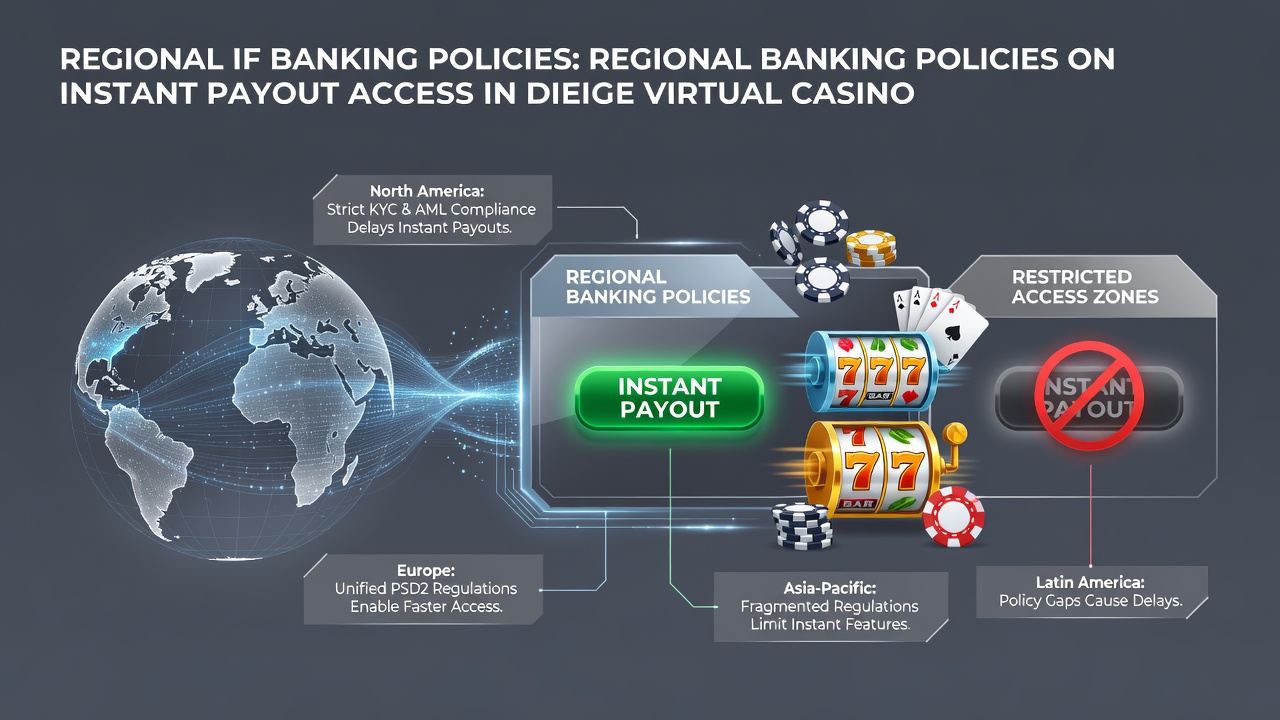
Regional banking policies play a direct role in determining which virtual casino platforms can deliver instant payout features to users, since financial oversight bodies in each jurisdiction set the rules that govern transaction speed, verification requirements, and fund transfer methods. These policies create noticeable differences across markets because banking frameworks reflect local priorities around consumer protection, anti-money laundering standards, and payment system stability, all of which affect how quickly operators can process withdrawals.
North American Approaches to Banking Oversight
State-level banking regulations in the United States often require extended verification periods before instant payouts become available, which leads many operators to implement tiered withdrawal systems that delay access until full compliance checks finish. In contrast, Canadian provinces such as Ontario have established frameworks through iGaming Ontario that allow faster processing when operators partner with approved financial institutions, and data from that regulator shows a measurable increase in approved instant transfer methods since the market opened. Observers note that these variations stem from differing approaches to risk assessment, where some regions prioritize rapid fund movement while others emphasize layered security protocols that extend processing times.
European and Asian Regulatory Patterns
Across the European Union, member states apply banking directives that influence payout timelines, with certain countries requiring operators to route all transactions through centralized payment gateways that add verification layers before instant options activate. Research indicates that operators in these markets frequently adjust their feature availability based on whether local banks permit same-day settlement, which creates a patchwork of access levels even within the single market. In parts of Asia, banking policies enforced by central authorities tend to restrict real-time transfers for gambling-related activity, which forces virtual casino platforms to rely on slower intermediary services or limit instant features to users who complete additional documentation steps.
Technical and Operational Adjustments by Operators
Virtual casino operators respond to these banking constraints by customizing their payout infrastructure on a region-by-region basis, often integrating multiple payment processors to match the rules of each jurisdiction. This approach allows platforms to offer instant features where banking policies support them while maintaining compliant slower options elsewhere, and case examples show companies that expanded into new markets after updating their systems to align with updated financial guidelines. Data shows that such adaptations have become more common as regulators refine their stances on digital payments, particularly when new banking partnerships open pathways for quicker settlement.
Developments Observed in Mid-2026
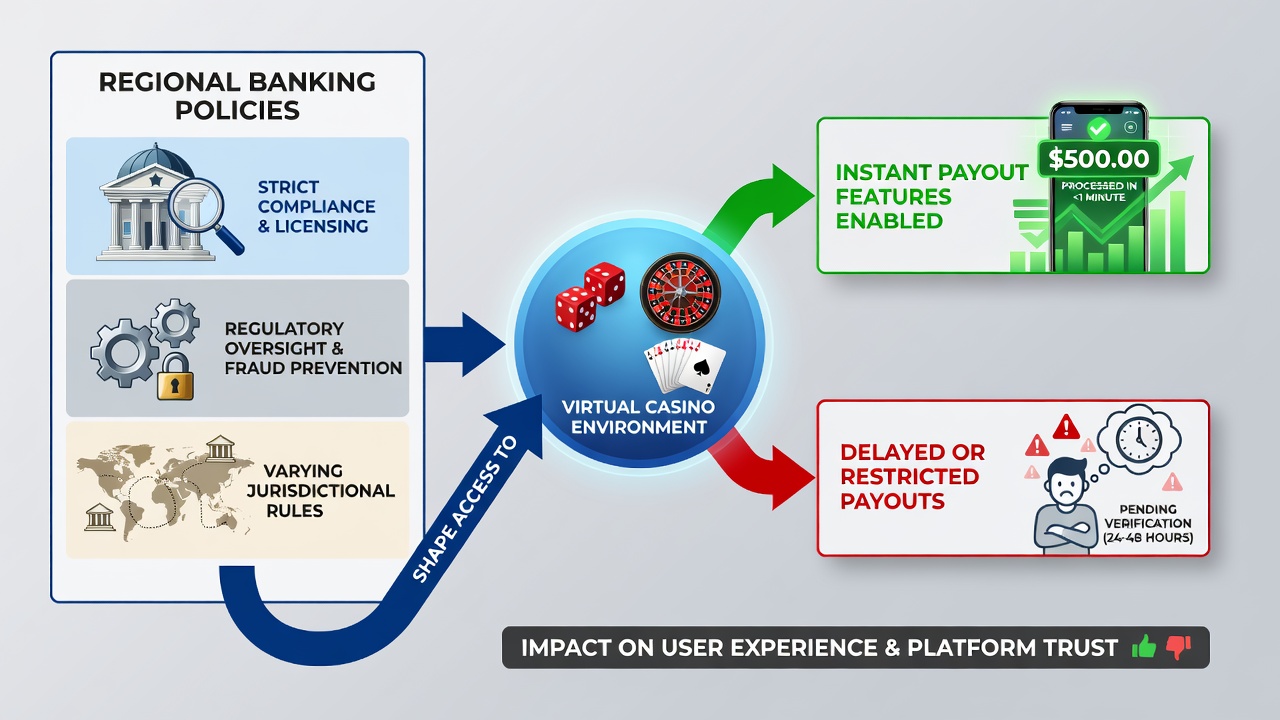
In June 2026, several jurisdictions released updated guidance on digital payment integration that directly affected instant payout availability, with some regions expanding approved banking channels while others introduced additional monitoring requirements that temporarily slowed feature rollouts. These shifts highlight how changes in banking policy can quickly alter the landscape for virtual casino users, since operators must recalibrate their systems whenever new rules take effect. Figures from industry reports reveal that markets wth more flexible banking alignments tend to see higher adoption of instant features, whereas stricter environments continue to favor traditional processing methods that include built-in delays.
Payment method preferences also intersect with these policies, as certain banking frameworks favor specific digital wallets or card networks that support faster verification and settlement. Operators track these preferences closely because they determine which instant options can be promoted in each region without violating local financial rules, and studies from academic institutions have documented correlations between banking openness and the range of payout speeds offered to users.
Conclusion
Regional banking policies continue to define the boundaries of instant payout access in virtual casino environments by setting the technical and compliance standards that operators must meet. As financial regulations evolve across different parts of the world, platforms adjust their offerings accordingly, which results in a diverse global picture where instant features appear in some markets and remain restricted in others. Those who follow these developments recognize that ongoing policy updates will likely keep shaping the availability and design of these features in the years ahead, with operators and regulators both playing roles in how quickly funds move between platforms and users.