Background Music Tracks Shape Decision Making in Online Blackjack Sessions
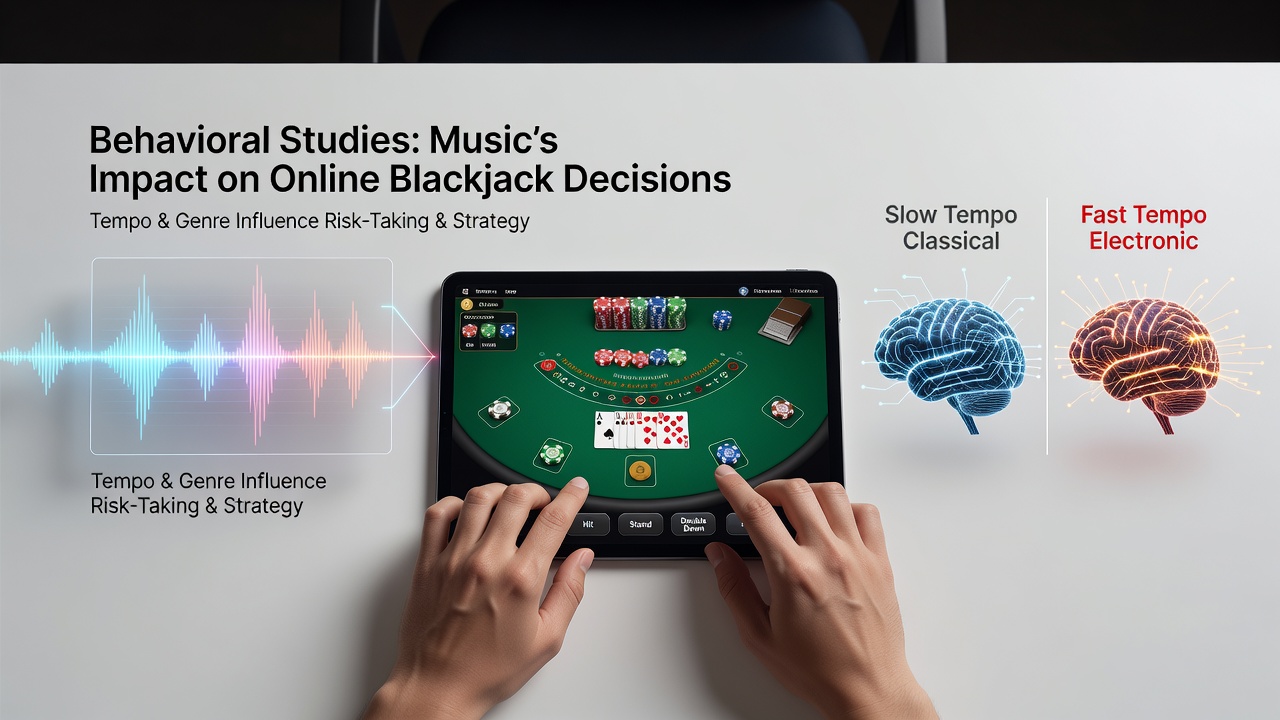
Behavioral research has examined how background music influences choices during online blackjack play, and studies reveal measurable shifts in risk assessment and strategy selection when specific audio tracks accompany the game interface. Data collected from controlled experiments shows that tempo, genre, and volume levels correlate with variations in hit rates, stand decisions, and wager sizing across participant groups. Researchers at several institutions have tracked these patterns through repeated trials, noting that music does not simply provide ambient sound but actively modulates cognitive processing tied to probability evaluation.
Experimental Designs Used in Recent Investigations
Teams conducting behavioral studies often divide participants into groups exposed to different audio conditions while they complete standardized blackjack scenarios on digital platforms. One protocol from 2025 involved 240 adults who played 50 hands each under silent conditions, fast-tempo electronic tracks, or slow classical pieces, with eye-tracking and response-time metrics recorded alongside every decision. Results indicated faster reaction times under upbeat selections, whereas slower tempos extended deliberation periods before participants committed to actions. Observers note that these setups isolate auditory variables while holding visual elements constant, which allows direct attribution of outcome differences to the music variable.
Observed Effects on Betting Patterns and Risk Tolerance
Participants exposed to high-energy tracks placed larger average wagers in early rounds compared with those hearing neutral or absent audio, according to aggregated session logs from multiple trials. Conversely, low-tempo selections coincided with more conservative bet sizing after initial losses. Behavioral data further shows that certain music genres correlate with deviations from basic strategy charts, particularly in borderline situations such as soft 17 or 16 against a dealer ten. Figures from these experiments demonstrate that the presence of lyrics in background tracks increased the frequency of impulsive hits, while instrumental pieces produced patterns closer to mathematically optimal play.
Demographic Variations in Music Sensitivity
Age and prior gambling experience emerge as moderating factors in how strongly background music affects choices. Younger adults in the 18-35 range exhibited larger swings in decision speed when music tempo changed, whereas participants over 45 maintained steadier patterns across conditions. Experienced players displayed smaller deviations overall, suggesting that familiarity with blackjack mechanics buffers some auditory influence. Studies conducted through university labs in North America and Australia have replicated these splits, with cross-regional samples confirming that cultural music preferences also play a role in response magnitude.
Platform operators have begun incorporating customizable audio options into their interfaces as a direct response to these findings. Users can now select from preset playlists or mute tracks entirely, and session analytics from July 2026 show increased retention among players who adjust sound settings to match personal preferences. This adjustment capability stems from evidence that mismatched audio environments can accelerate fatigue or prompt premature session exits.

Neurophysiological Correlates Identified in Supporting Research
Additional investigations pair behavioral observations with physiological measures such as heart-rate variability and skin conductance. Elevated arousal markers appear more frequently when participants hear stimulating tracks, aligning with increased bet sizes and quicker decision cycles. Slower music produces steadier physiological readings that correspond to extended evaluation of dealer upcards and remaining deck composition. These combined datasets, drawn from work published through academic channels, establish a pathway from auditory input through emotional state to final action selection during play.
Regulatory bodies in several jurisdictions have referenced such research when reviewing responsible gaming features. Canadian provincial authorities and Australian state commissions have cited behavioral studies on sensory inputs when evaluating platform design standards, although implementation remains voluntary for most operators. Industry reports from gaming associations similarly note that music customization tools represent one practical application of these laboratory insights to real-world environments.
Future Directions for Audio Integration Studies
Researchers continue to explore interactions between background music and other variables such as session length, stake limits, and concurrent chat features. Longitudinal designs now track whether repeated exposure to particular tracks produces habituation effects that diminish initial impacts on decision quality. Early data suggest that novelty in audio selections sustains stronger influence, while familiar tracks lose potency over multiple sessions. These evolving lines of inquiry aim to refine understanding of how auditory design choices intersect with player cognition across extended online blackjack activity.
Conclusion
Collective evidence from behavioral studies establishes that background music tracks exert measurable effects on decision-making sequences during online blackjack sessions. Specific audio characteristics correlate with shifts in wager size, strategy adherence, and response timing, and these patterns hold across diverse participant samples. Platform adaptations and regulatory considerations reflect growing recognition of these auditory influences, while ongoing research seeks to map longer-term dynamics and additional moderating factors.